The word finance is a slavish word
The Social Contract“The word finance is a slavish word” is Rousseau’s pointed expression for the political cost of replacing citizens’ direct public service with money. It connects civic withdrawal to taxation and inequality: a free community, he argues, should not let payment become a means of escaping shared duties, while legitimate public contributions must answer to the general will and be assessed justly.
Meaning and Civic Context
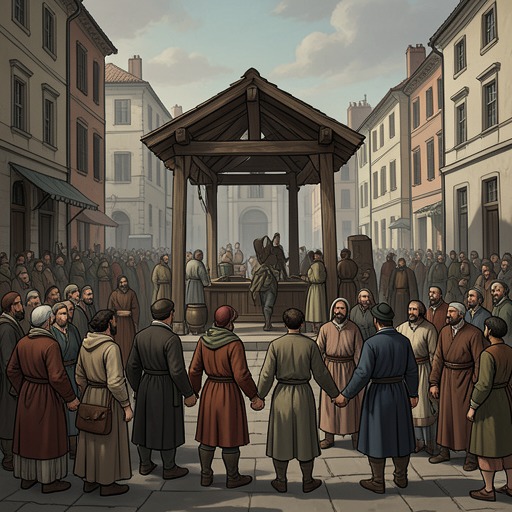
Rousseau introduces the phrase in a contrast between personal participation and paid substitution. Citizens who would rather serve with money than with their persons pay troops instead of marching to war and appoint deputies instead of attending public councils. In his account, the habit grows from commercial activity, the pursuit of profit, and a preference for comfort: people surrender part of their earnings to free time for increasing them. The result is not simply a different method of service. Soldiers may enslave their country, while representatives may sell it.
The phrase gives this political change a sharp name. Finance is “unknown in the city-state,” Rousseau says, because in a truly free country citizens perform public duties themselves rather than paying to be exempted. He even holds enforced labour less opposed to liberty than taxes. The claim is not an isolated dislike of money: it marks the point at which private convenience displaces direct responsibility for public life.
Participation and Political Decline
For Rousseau, the danger of payment belongs to a wider withdrawal from civic affairs. A well-ordered state makes public business important in the minds of its citizens, who hasten to assemblies because their common happiness bears on their own. Under bad government, people stay away: they expect the general will not to prevail, and domestic concerns absorb them. When someone asks what the affairs of the state matter to them, Rousseau treats that indifference as a sign that the state is nearly lost.
He traces the rise of representatives to several pressures: weakened patriotism, active private interest, the great size of states, conquest, and the abuse of government. Representation thus accompanies the preference for money over personal service. The public interest, in Rousseau’s deliberately ranked account, is relegated behind the individual interests of two orders. Finance and representation become related signs of a political order in which citizens have ceased to act directly together.
Property, Public Needs, and Taxation
The argument does not erase the importance of property. Rousseau calls property a particularly sacred right of citizenship: it helps preserve life, underwrites citizens’ commitments, and gives civil society a foundation. At the same time, maintaining the state requires expenditure, so members must contribute from their property. The difficulty is that securing property through law can also constrain its use, while public costs can threaten the very right the state is meant to protect.
Rousseau distinguishes an imagined direct arrangement from the realities of governing. If the people governed itself without intermediaries, citizens could assess themselves according to public needs and individual means and keep the use of the money in view. But even a small state is too populous for every member to govern it immediately. Funds therefore pass through rulers, who have private interests as well as public responsibilities. Citizens may see their necessities taken to provide rulers’ superfluities; once mistrust has hardened, voluntary contributions fail, while forced contributions violate the right of property. This is the central tension behind the phrase: public finance is necessary, but payment administered at a distance can weaken both trust and civic freedom.
A Standard of Fiscal Justice
Rousseau’s proposed standard begins with consent. Since the social compact rests on property and promises peaceful possession, a tax must answer to a publicly recognized need. Its legitimacy rests not on each person’s separate permission to pay whatever they choose, but on a general will decided by majority vote and a proportional assessment that leaves nothing arbitrary in the imposition.
Proportion, in turn, requires more than counting possessions. Rousseau says that, other things being equal, a person with ten times another’s property should contribute ten times as much. He also distinguishes necessities from superfluities: those who possess only common necessities should pay nothing, while the tax on those with superfluities may extend to what exceeds those necessities. A person’s rank does not make every luxury necessary; a minister who sold his carriages to meet an urgent public need, he observes, would earn the people’s admiration.
A further measure is the benefit people receive from social protection. Rousseau contrasts the extensive protection afforded the rich and powerful, including the public authority’s readiness to respond when a prominent man is robbed or insulted, with the barriers faced by the poor in obtaining assistance and justice. The poor also bear public burdens from which wealthier neighbours may secure exemption. Set beside this unequal distribution of protection, a uniform-looking tax cannot by itself count as fair. The expression’s larger force lies in that contrast: finance is politically suspect when citizens pay into a system that protects property and privilege unevenly, rather than sustaining a common life to which all contribute on equitable terms.